Gridleak
Presets derived from the real amp circuit, not someone's ears in a room.
- Role
- Design & Engineering
- Year
- 2026 · gridleak.app
- Built
- Autonomously, with AI agents
- Disciplines
- Agentic EngineeringComputer VisionCircuit ModelingHardware IntegrationProduct Design
Gridleak turns guitar amp schematics into presets for modelers. Most presets start from someone's ears in their room; Gridleak starts from the circuit itself. Underneath is a vision pipeline that reads factory schematics, reviews every reading adversarially, and feeds a family of products: presets for 17 modelers from Neural DSP, Fractal Audio and Line 6, one-click install straight onto the hardware, builder-grade schematic redraws, researched amp pages, an AI tone generator and the commerce around all of it. 2,635 amps from 260 makers so far. I designed it and directed its build end to end, with AI agents doing the building.
Every preset starts from an approximation.
I wanted to know what it would look like to start from the physics instead.
I've played through modelers and MIDI rigs for twenty years, and the same thing always nagged me: every preset starts from an approximation. Someone dials in a tone by ear, shares it, and the community builds on that foundation. What if the bass knob position came from the capacitor values in the original tone stack? What if the gain structure reflected the amp's actual gain staging? Not ear-tuned guesswork. Something derived from the circuit.
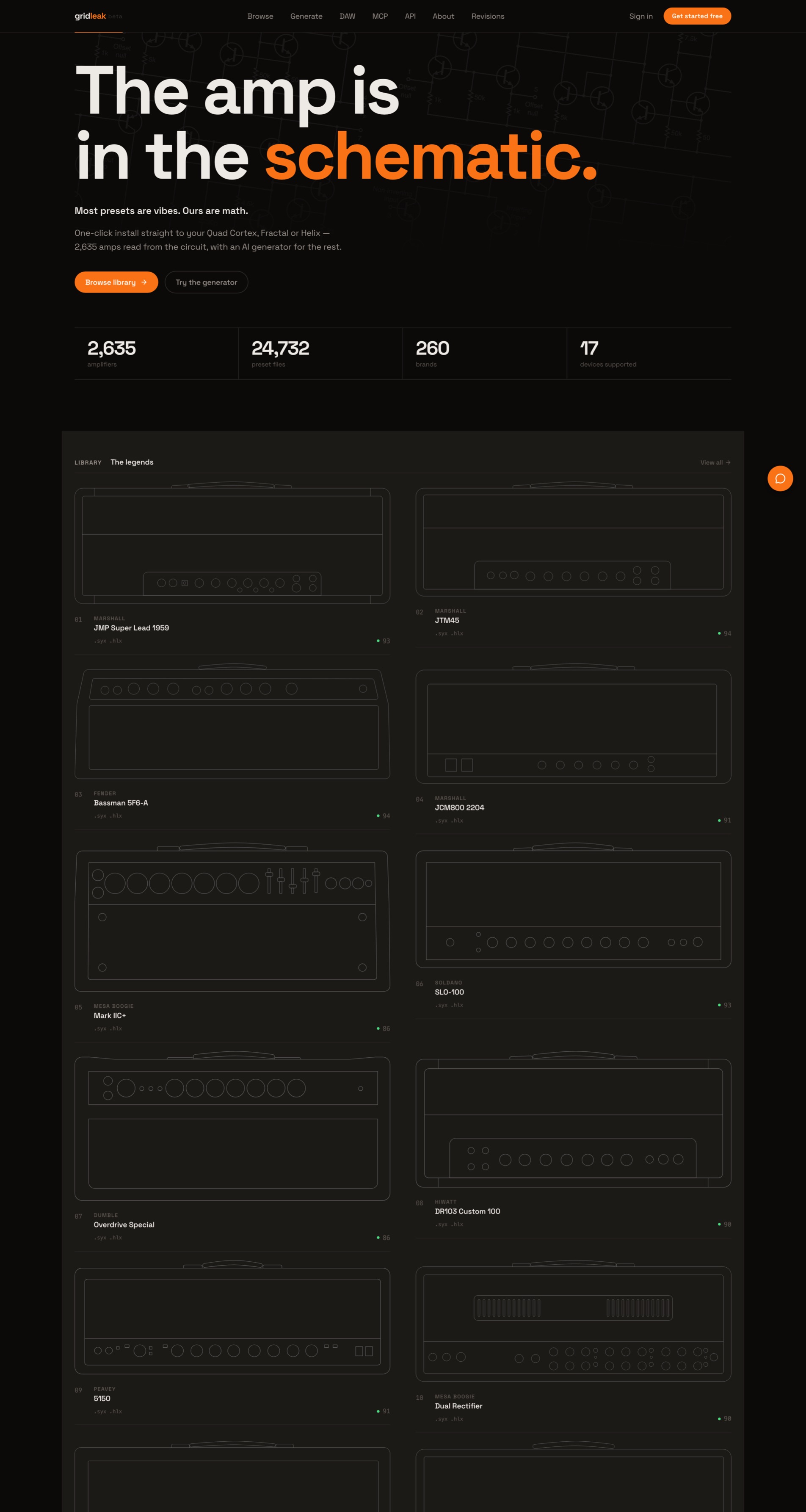

The first full product shipped overnight.
I didn't build Gridleak by hand. I set the direction, wrote the requirements and the quality bar, and ran AI agents that plan, build, test and verify their own work. My job was the product: what it should be, what good looks like, and what to do next.
The first full product came out of one unattended overnight run. Eight phases and forty plans, each one planned, built and checked by agents in sequence, with a watchdog standing by. By morning there was an API, a database, billing, search, Web MIDI install, an AI generator and a React frontend.
- phase 04API, database schema, file storage, billing webhooks✓ verified
- phase 05Batch extraction CLI, serializers for five devices✓ verified
- phase 06Accounts, checkout, customer portal, usage quotas✓ verified
- phase 07Full-text search, preset pages, gated downloads✓ verified
- phase 08Web MIDI install: SysEx sender, device detection✓ verified
- phase 09AI tone generator, cached, uploads to every device✓ verified
- phase 10React frontend: eight pages, auth, dark theme✓ verified
- phase 11Deploy config, logging, smoke and load tests✓ verified
Nothing goes live on an agent's word.
Speed only matters if the output can be trusted, so review is built into the loop. Plans are checked before work starts. Finished work is verified against its goals by a separate agent. Anything that touches circuit data is reviewed adversarially: two agents read the same drawing blind, and software compares their work part by part. And before anything ships, the catalog has to pass an integrity audit of nineteen checks with zero issues.
The same loop has carried Gridleak from that first night to 1,280 commits in six months.
One vision pipeline. Many products.
The heart of Gridleak isn't any one page. It's a pipeline that reads a schematic once, verifies it, and hands the result to every system downstream. Presets, install, redraws, amp pages, the generator, the factory model map, commerce, the Data API and the guides all draw from the same verified circuit, so an improvement at the source reaches every product.
- 01 Schematic corpus Factory drawings and service manuals, filed by amp and channel.
- 02 Vision read Agents read every part, value and connection into a netlist.
- 03 Adversarial review Two independent reads, a part-by-part diff, a tie-break read, rule checks.
- 04 Verified circuit One netlist per amp. The source of truth for everything downstream.
- Presets Circuit math and per-device synthesis: 24,732 files for 17 modelers.
- One-click install Straight onto Quad Cortex, Helix and Fractal from the browser.
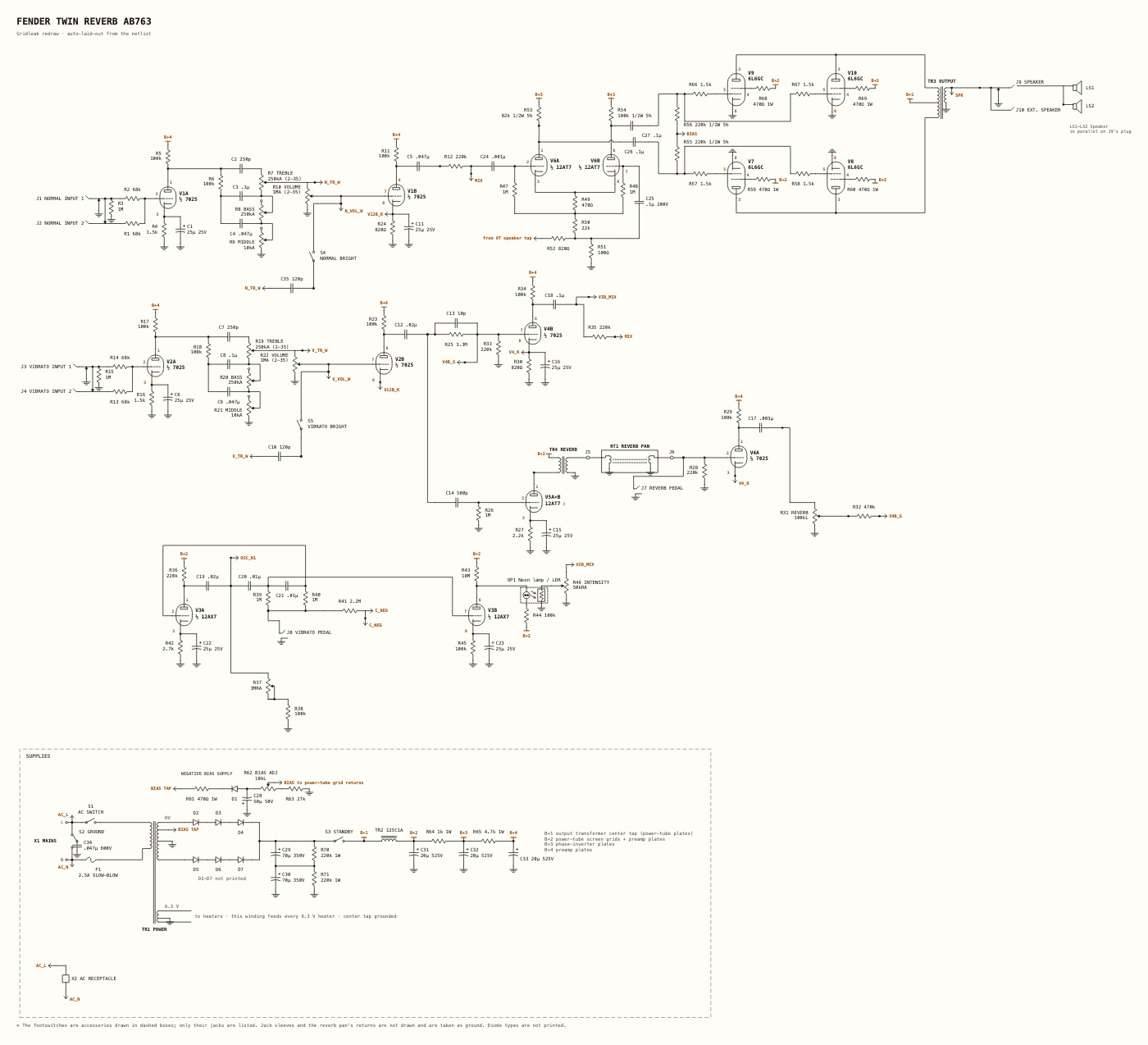
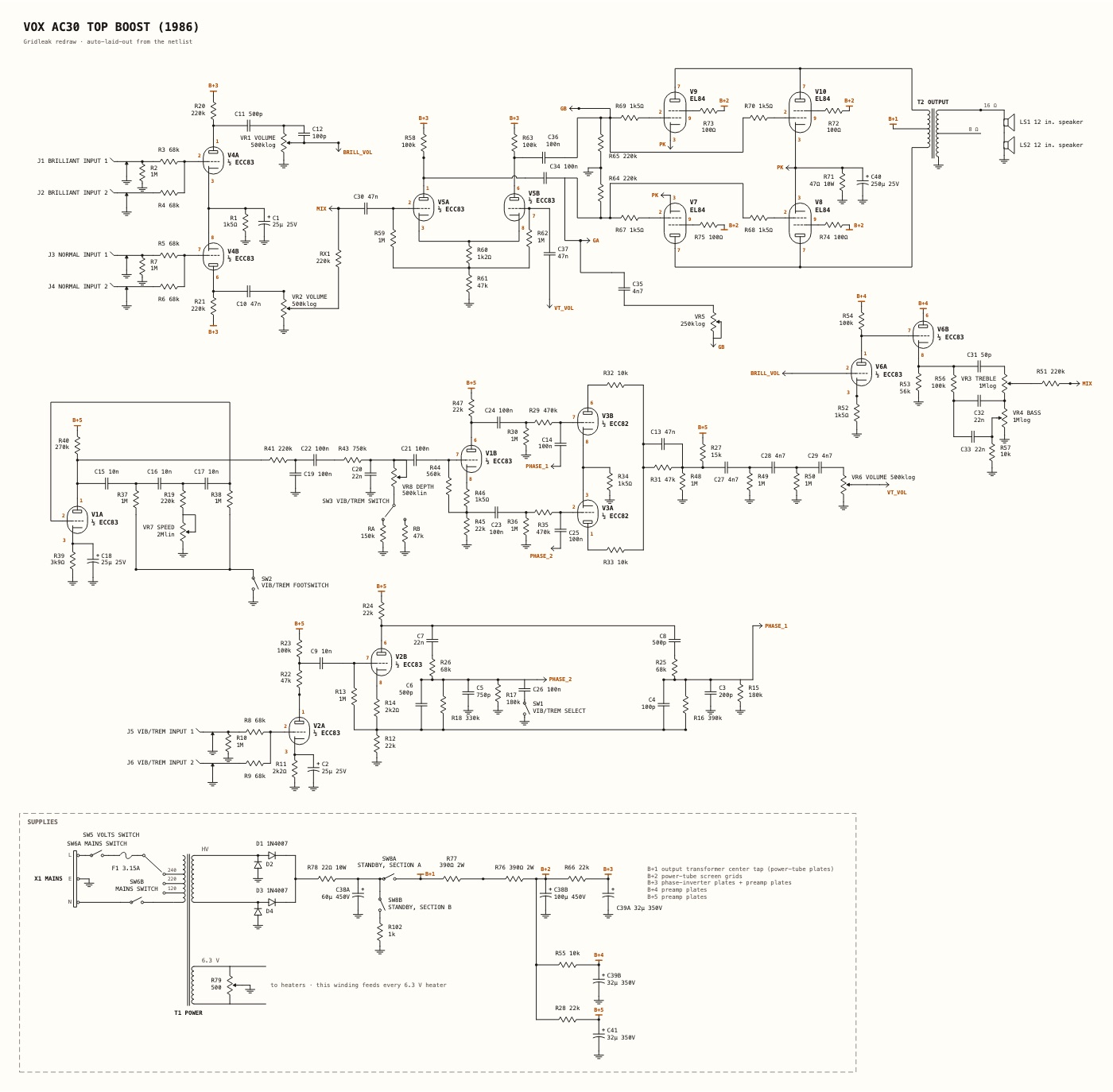
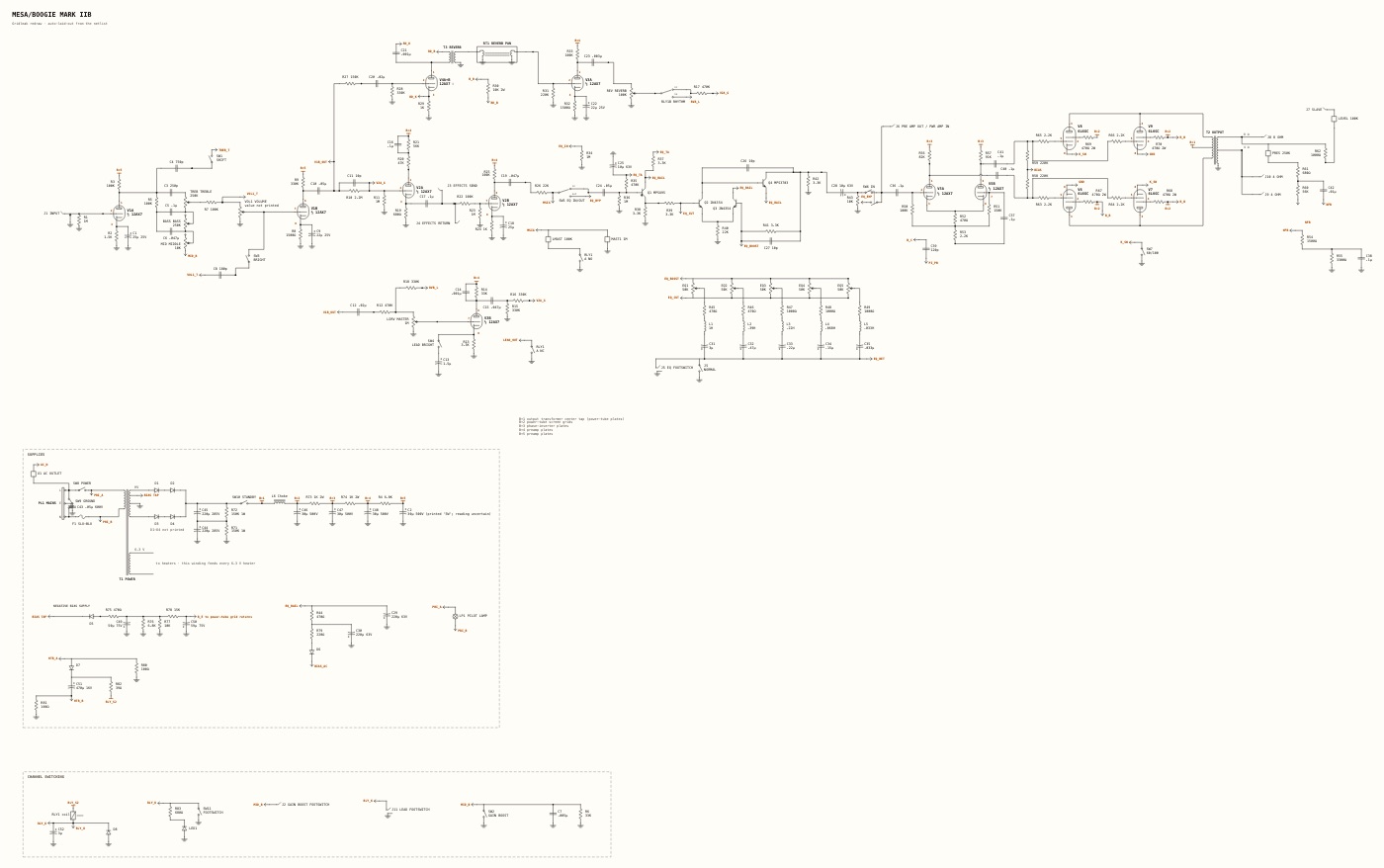
- Schematic redraws Auto-laid-out drawings, parts lists, SPICE and KiCad netlists.
- Amp pages Research agents source the years, specs, players and records.
- Tone generator A plain-English tone, built as a full chain for your device.
- Factory model map Every modeler's built-in amps, tied back to the real circuit.
- Commerce Pro, bench packs, and live listings for the exact amp.
- Data API + MCP Circuit data for developers and for AI assistants.
- Guides Manuals for the modelers, built to be found.
Schematics are human-readable, machine-opaque.
Amp schematics live online as PDFs: scans of hand-drawn diagrams, often from 50-year-old service manuals. A guitar amp's tone comes from a small set of passive components in the tone stack, so the work starts by reading those values off the drawing, with knowledge of each amp family's conventions and every value checked against physical range gates.
From there it's math. The classic tone stack has a well-understood transfer function: given the component values, you can compute the real frequency response at every knob position. A 1959 Marshall Plexi has a specific mid scoop that is genuinely different from a JCM800, which is different again from a Soldano SLO. Negative feedback and power-supply sag get the same treatment, because they're what you feel in the pick attack. Where physics runs out, captures of real amps fill in the drive and harmonic character.
Every amp carries a confidence score for how much of its circuit was readable. 2,571 of the 2,635 are Verified: a full schematic with every value readable.
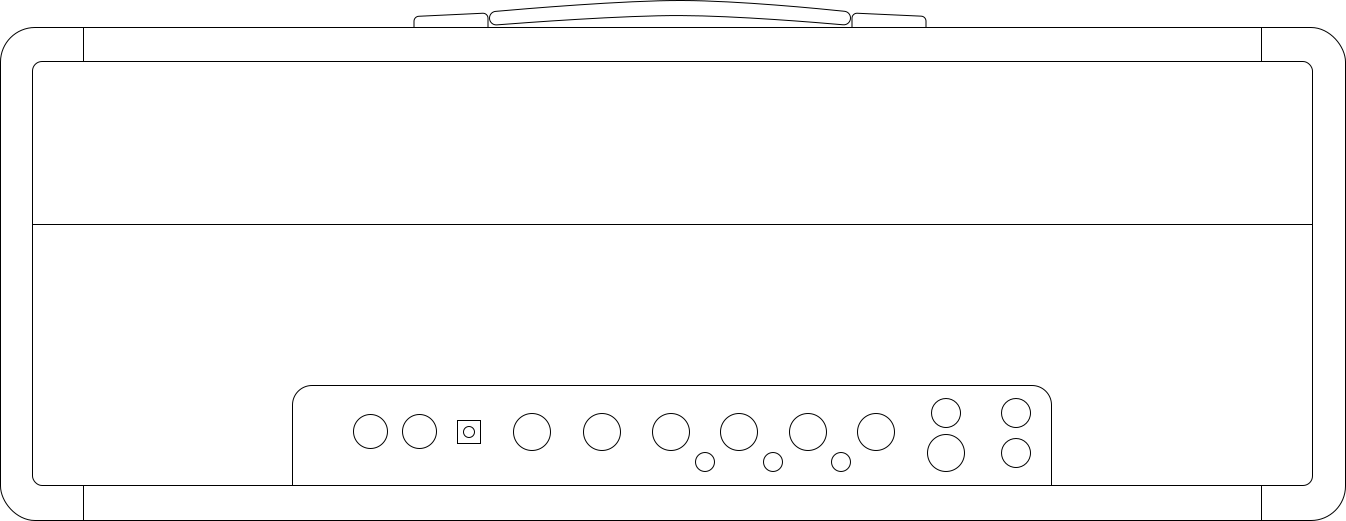
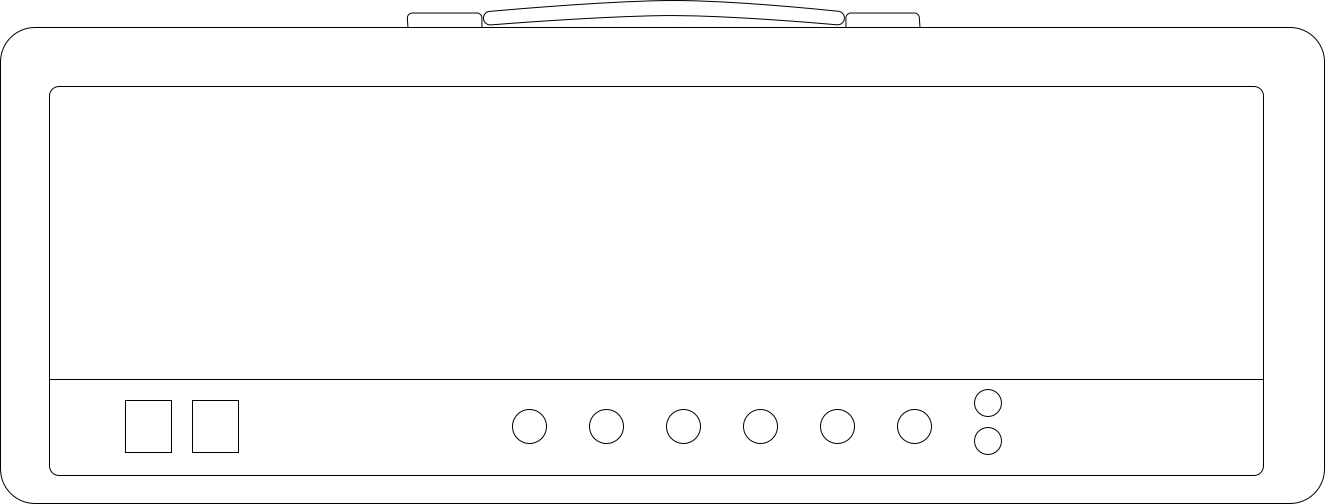
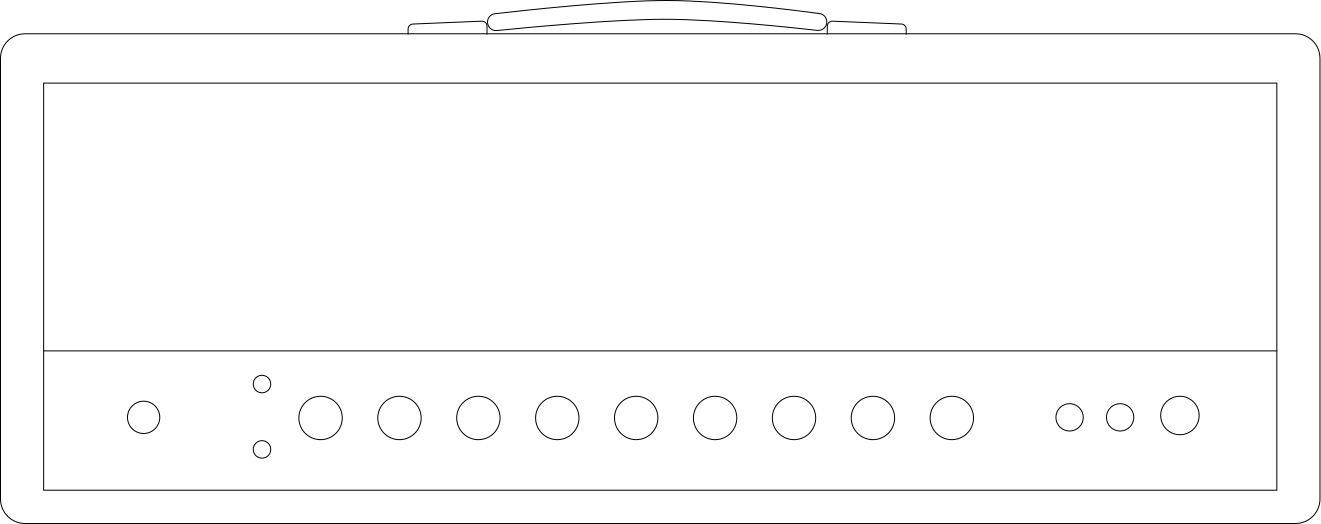
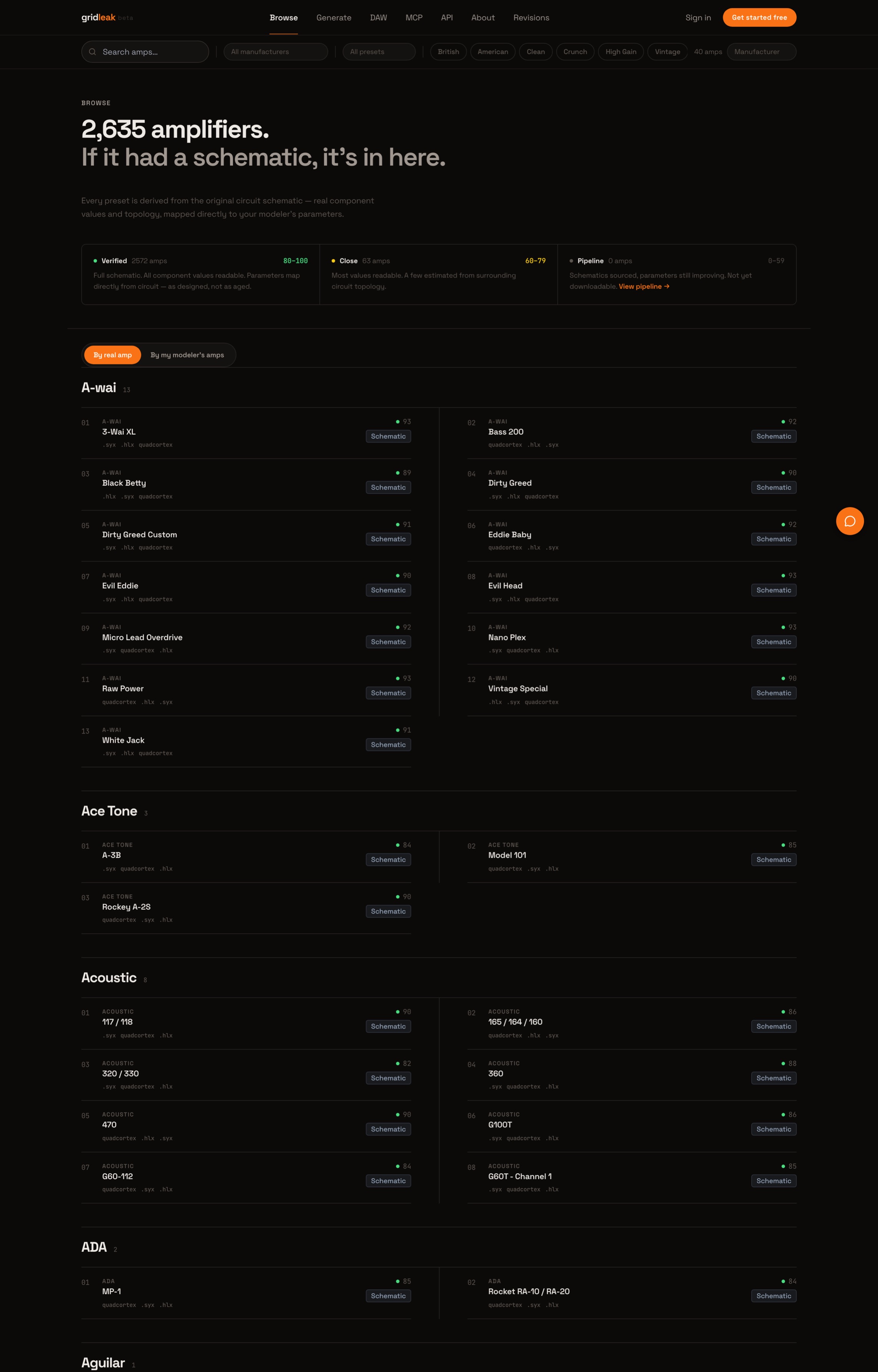
Not vibes, math.
Every amp has a story. Ours are sourced.
The About tab on every amp page (production years, specs, the players who used it and the records it's heard on) is written by research agents working in parallel. They pin the exact model with the circuit first, read the source page rather than a search summary, and quote the sentence that proves each claim. Every patch carries its sources and is validated before it merges, and each description is checked against the amp's own drawing.
- 01The maker's own wordCatalogs, drawings, manuals and histories need no second source.
- 02The player's own wordA player, producer or engineer saying it in an interview or memoir.
- 03Otherwise, two sourcesIndependent and reputable. Forums and listings are leads, never proof.
- 04An empty field beats a wrong oneIf it can't be sourced, it isn't published.
- Hey Hey, My My (Into the Black)Neil Young & Crazy Horse1979
- Hotel CaliforniaEagles1976
- VertigoU22004
Every release starts from what players reach for.
Gridleak grows in small, continuous releases, published in a public revisions log. Each one is the same loop: look at what players search for, open and download, decide what the catalog or product needs next, have agents build it, check it against the drawing, ship.
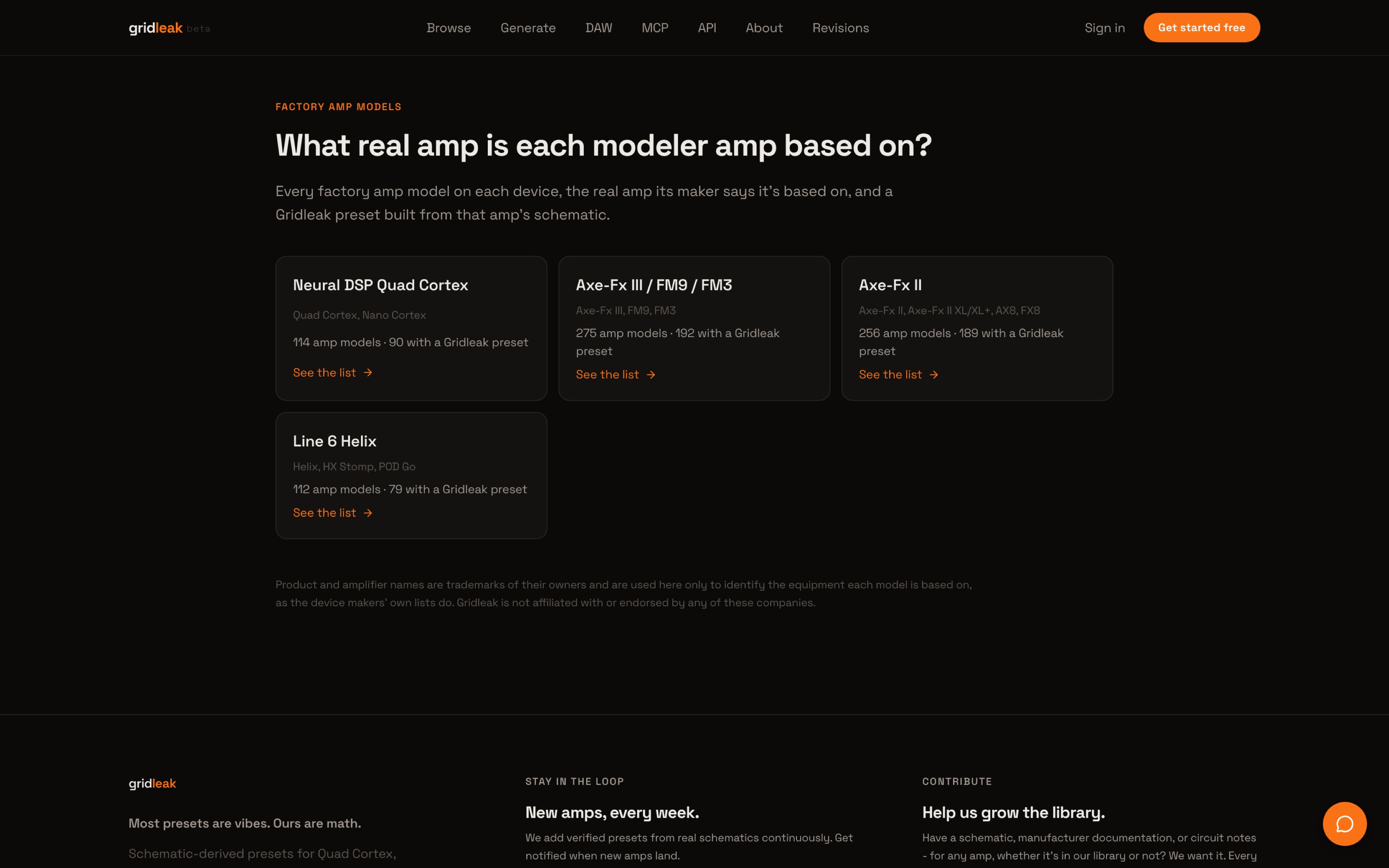
The data shaped the big moves. The amps players ask about most, the legends, are first in line for new work. Landing-page variants are A/B tested at the edge for free. And because most players think in terms of the amps already built into their modeler, every factory amp model on every supported device now links to the real amp its maker says it's based on, and to a preset built from that amp's schematic.
From a web page to your rig. No editor, no files.
Getting a preset onto a modeler normally means downloading a file, opening the maker's editor, finding a slot and importing it. Gridleak does it in one click, straight from the browser, on three platforms that were never meant to be driven from a web page. Each one meant reverse-engineering a private protocol and rebuilding it in the browser, on a different browser API every time.
The result feels effortless: connect once and the unit stays connected while you browse. Gridleak reads your presets back, picks the first empty slot, tells you exactly what you'd replace, installs with live progress and checks the result.
- 01Connect onceThe unit stays connected while you browse, and reconnects on its own after a reload.
- 02Reads your presets backThe unit's own setlists and slots, listed before anything is written.
- 03Picks the first empty slotAnd remembers the setlist you used last.
- 04Warns before replacingChoose a used slot and it says exactly what would be overwritten.
- 05Installs step by stepLive progress as each part of the preset lands on the unit.
- 06Confirms on the unitThe new preset is read back by name.
Install on your Quad Cortex
Straight to your unit over USB. Pick a slot, done. No editor, no files.
Chrome or Edge on desktop · quit Cortex Control first
CorOS 4.1.0 ✓Reading presets…
✓ Saved to Gridleak · 1C
“Mark IIC+ - Lead” is ready to play.
A working recreation of the install panel. Try it.
Neural DSP Quad Cortex
Its shareable preset format is encrypted, and the unit has no way to export one. So Gridleak doesn't send a file: it drives the unit live. Recall a base preset, set the amp block, set every knob by the model's own parameter index, set the cab, save to the slot you chose.
- 129-byte HID reports
- 533 models, 3,809 parameters mapped
- Names fitted to the unit's 20 characters
Line 6 Helix + HX Stomp
The Helix MIDI port only takes program changes; its editor talks over a private USB pipe the browser's MIDI API can't reach. Six reverse-engineering sessions mapped that protocol from the editor's own traffic, then rebuilt it in the browser.
- Three-channel packets, sequence and ack counters
- Preset conversion byte-identical to the editor's
- Native HX Stomp presets across 126 slots
Fractal Audio
Two undocumented rules make bulk SysEx stick. Every MIDI input has to be open, or the unit acknowledges each chunk and never commits. And the whole transfer has to leave in a single tick, or the unit's tempo broadcast times the session out.
- 34 messages, one tick
- Store-to-slot captured from the editor
- Read back by name
8 install drivers · 3 browser APIs · 0 editors needed
Our own drawings, clean enough to build from.
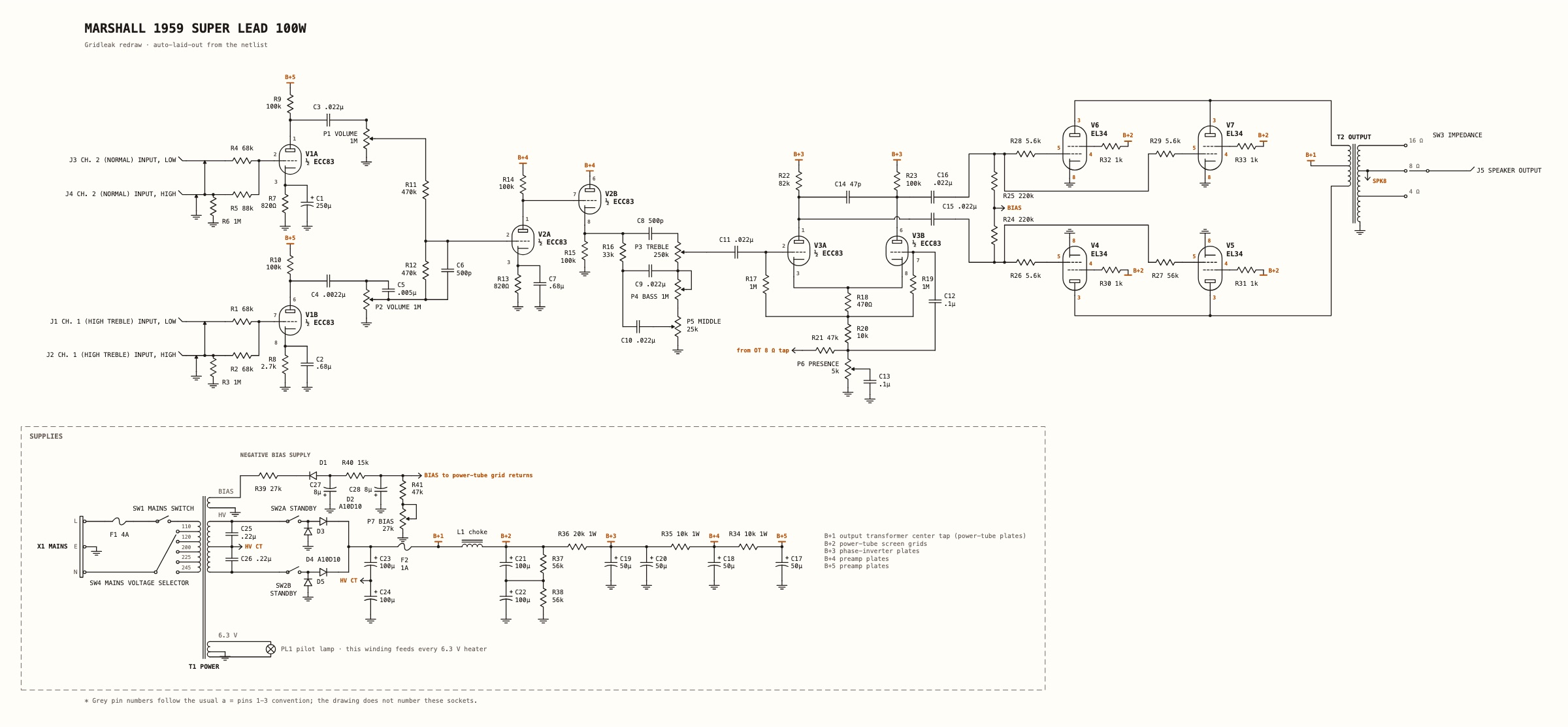
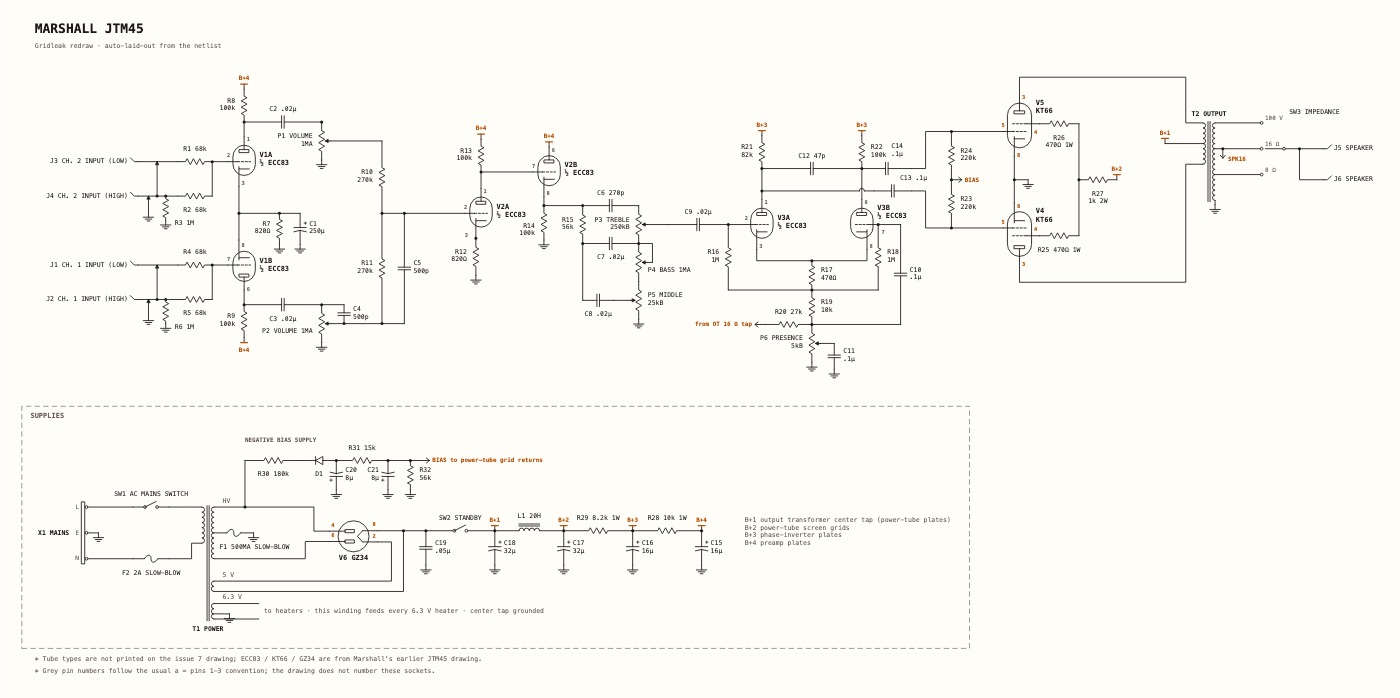
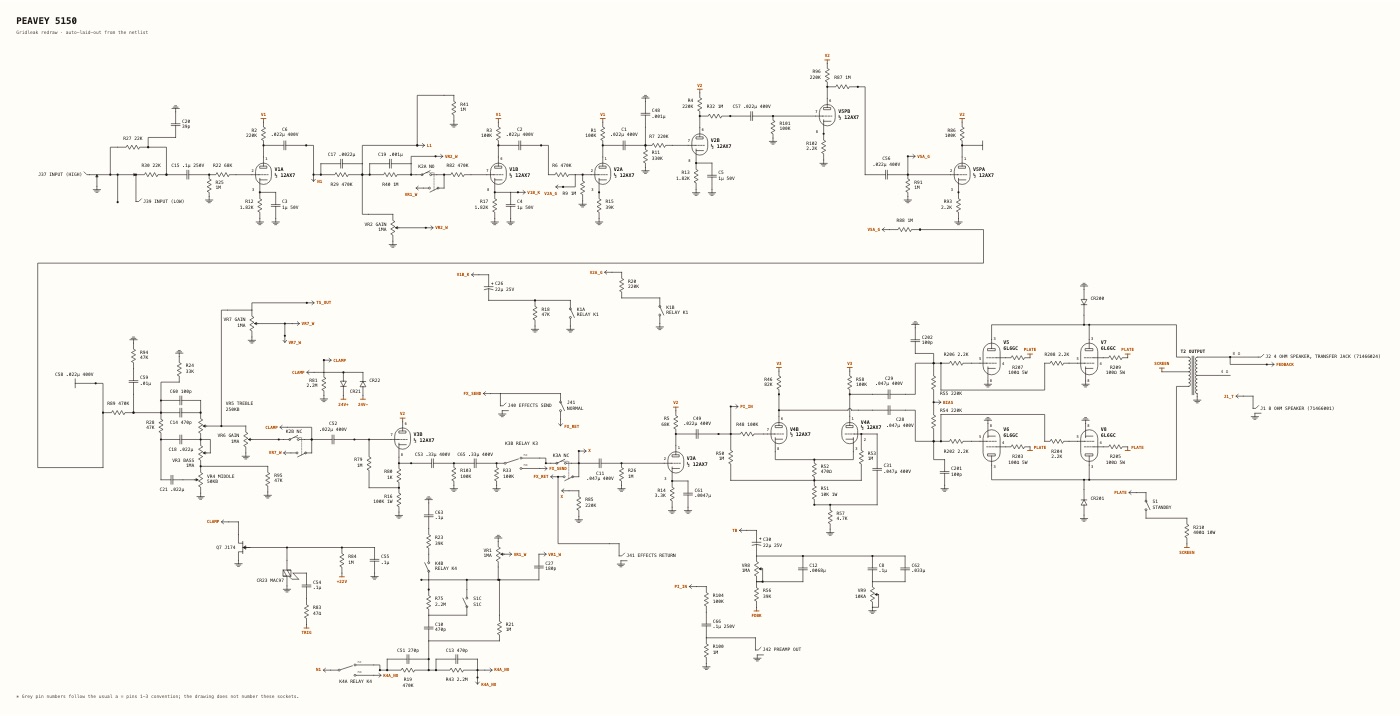
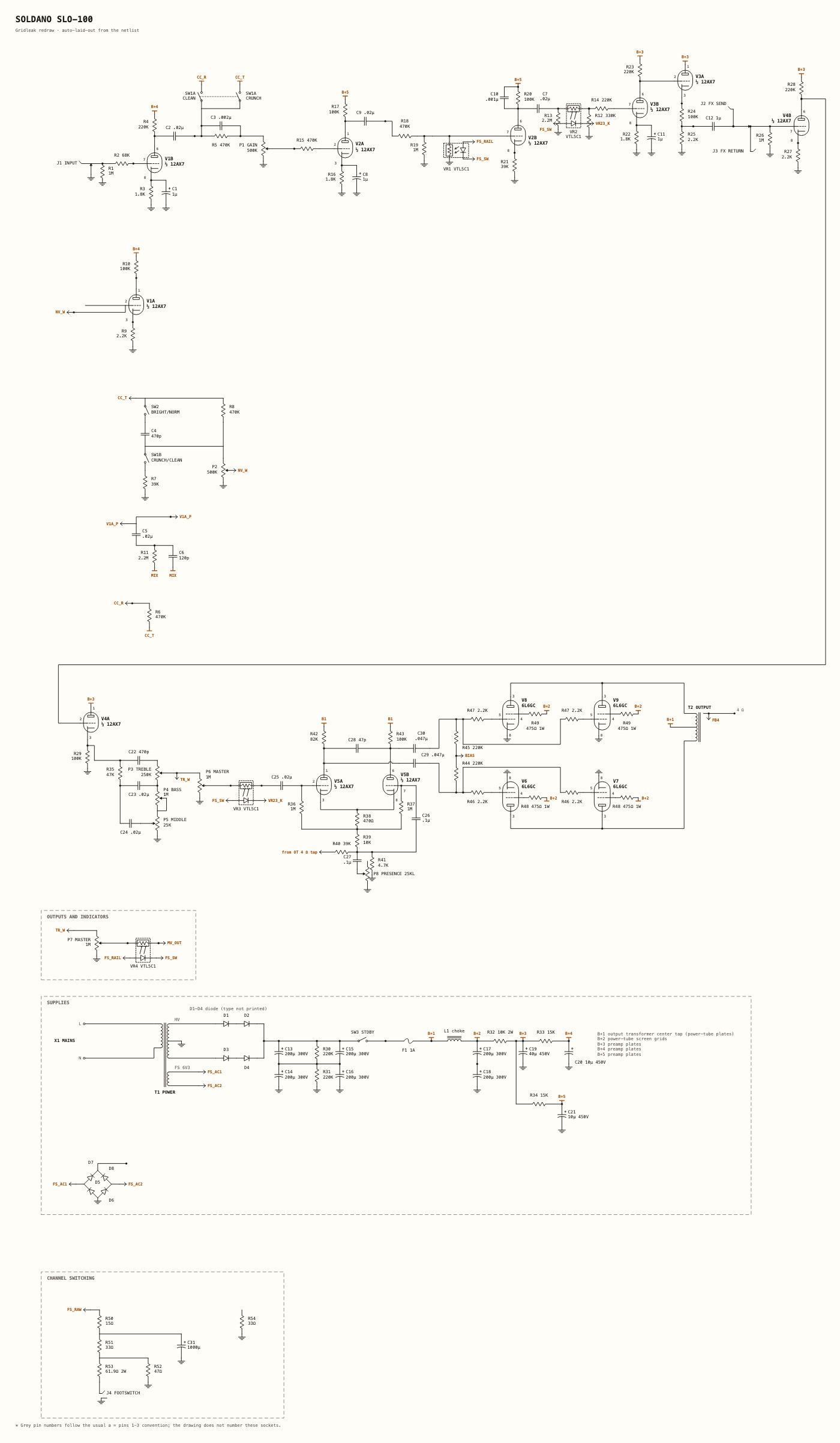
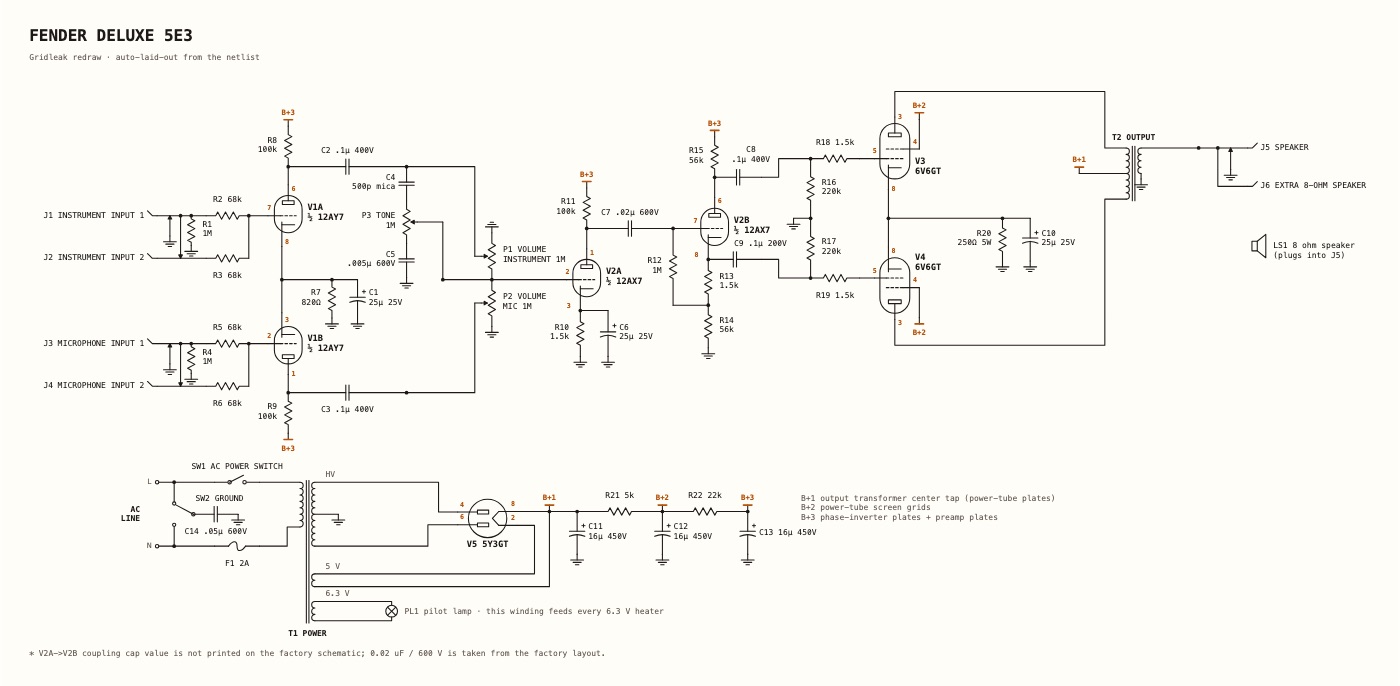
The verified circuit became a product of its own. Gridleak redraws an amp's factory schematic from scratch as a builder- and repair-grade drawing, laid out automatically from its netlist. Each channel runs on its own row, tone stacks read left to right, and switching and power supplies sit in their own labelled blocks. Every junction carries a dot, and every electrolytic capacitor's polarity is checked. 42 amps are live, from the tweed Champ to the Dual Rectifier.
Adversarial review, part by part.
Two agents read the same factory drawing independently, never seeing each other's work. Software compares the two netlists part by part and net by net, and every disagreement goes to a third read, settled against the drawing itself. Here, the two reads of a Peavey 5150 disagreed on a single capacitor.
- C2622uF
- C27100pF
- C28.047uF
- R20220k
- VR11M
- C60100pF
- C2622uF
- C27180pF
- C28.047uF
- R20220k
- VR11M
- C60100pF
The capacitor's leads overprint the middle digit of its value. That glyph was compared against a printed "0" in the same font, with the same overprint, on the same sheet: it has a filled waist and a separate lower counter, the shape of an 8.
A drawing you can read stage by stage.
In the Schematic tab, the drawing and its guide work together. Pick a stage of the signal path and the drawing zooms to it while the rest falls back, with an explanation of how that stage works. Find any part by reference or value, and see voltages, transformer data and the notes from verification. Scroll to walk the Marshall 1959.
Everything for the bench, in one download.
For Pro members, one pack per amp: a print-ready PDF of the drawing, the parts list as PDF and CSV for ordering, a SPICE netlist to simulate the circuit and a KiCad netlist to start your own layout. All generated from the same verified netlist.
| Qty | Type | Value | References | Function |
|---|---|---|---|---|
| 3 | Resistor | 68k | R1 R2 R4 | Grid stoppers |
| 4 | Resistor | 1M | R3 R6 R17 R19 | Grid references; grid leak |
| 3 | Tube | ECC83 | V1 V2 V3 | Gain stages; phase inverter |
| 2 | Resistor | 820 | R7 R13 | Cathode bias |
| 1 | Electrolytic | 250uF | C1 | Normal cathode bypass |
| 1 | Resistor | 2.7k | R8 | High-treble cathode bias |
| 2 | Capacitor | 0.68uF | C2 C7 | Partial cathode bypass |
| 5 | Resistor | 100k | R9 R10 R14 R15 R23 | Plate loads; follower load |
* Marshall 1959 Super Lead 100W · Gridleak netlist
* Pots are split at 50% rotation.
R1 BR_1 V1B_G 68k
R2 BR_2 V1B_G 68k
R3 BR_2 0 1Meg
XV1A V1A_P V1A_G V1A_K ECC83  ; P G K
XV1B V1B_P V1B_G V1B_K ECC83  ; P G K
R7 V1A_K 0 820
C1 V1A_K 0 250u
R8 V1B_K 0 2.7k
C2 V1B_K 0 .68u
R9 V1A_P B5 100k
C3 V1A_P VOLN_T .022u
RP1_a VOLN_T VOLN_W {1Meg/2}  ; Normal volume
RP1_b VOLN_W 0 {1Meg/2}
R11 VOLN_W MIX 470k
XV2A V2A_P MIX V2A_K ECC83  ; P G K
XV2B B4 V2A_P CF_K ECC83  ; P G K
C8 CF_K TR_T 500p
R16 CF_K SLOPE 33k
(export (version "E")
(design (source "marshall/jmp_superlead_100w_1959") (tool "Gridleak"))
(components
(comp (ref "J1") (value "Ch. 1 (high treble) input, low")
(libsource (lib "gridleak") (part "jack")))
(comp (ref "R1") (value "68k")
(libsource (lib "gridleak") (part "resistor")))
(comp (ref "R5") (value "88k")
(libsource (lib "gridleak") (part "resistor")))
…
(nets
(net (code "1") (name "AC_F")
(node (ref "F1") (pin "2"))
(node (ref "SW1") (pin "1")))
…
"I know what I want to sound like."
The library solves "I know which amp I want." The generator solves "I know what I want to sound like." A player describes a tone the way they'd describe it to an engineer, an artist, a record, a feeling, and gets a preset built for their own hardware in seconds.
It works in two halves. First, Claude defines the tone: it reads the description and writes a structured tone spec, naming the real amp it calls for and its circuit (one of 21 tone-stack families, the power tubes, the rectifier, negative feedback, a bright cap), the gain and EQ, and the effects, down to a dotted-eighth delay at the right tempo. Then Gridleak builds it, deterministically. The same device code behind the 24,732-preset library resolves the spec into each modeler's own native amp model and parameters on real factory templates: the rectifier sets the sag, the topology picks the tone stack, class-A circuits get their bias, and cabs get their voiced cuts. Values are clamped so nothing comes out silent or ear-splitting, and each description is cached by its fingerprint, so the same words always give the same tone.
"The Edge's clean on Where the Streets Have No Name: dotted-eighth delay, open and glassy. The cathedral thing."
{
  "amp_reference": "Vox AC30 Top Boost",
  "amp": { "gain": 0.58, "bass": 0.42, "mid": 0.55,
           "treble": 0.68, "presence": 0.6, "master": 0.72 },
  "circuit": {
    "tone_stack": "TOP_BOOST",
    "power_tube": "EL84",
    "rectifier": "tube",
    "has_nfb": false,
    "has_bright_cap": true
  },
  "effects": {
    "delay":  { "subdivision": "dotted_eighth", "time_ms": 370,
                "feedback": 0.45, "mix": 0.32 },
    "reverb": { "type": "hall", "decay": 0.6, "mix": 0.22 }
  }
}- Amp
- A30 Fawn Brt
- Cab
- 2x12 Blue Bell, voiced cuts
- Sag
- from the tube rectifier
- Reverb
- Hall
- Base
- nearest factory preset
- Tone stack
- Top Boost
- Power tube
- EL84
- Delay
- dotted eighth
The prompt is one of the generator's own examples; spec values are illustrative.
From the preset to the real thing.
Gridleak earns from the whole journey a player takes, from the free preset to the amp itself.
- Free and ProFive free downloads a month. Pro is unlimited, at $14.99 a month or $99.99 a year, and opens the full interactive schematics and bench packs.
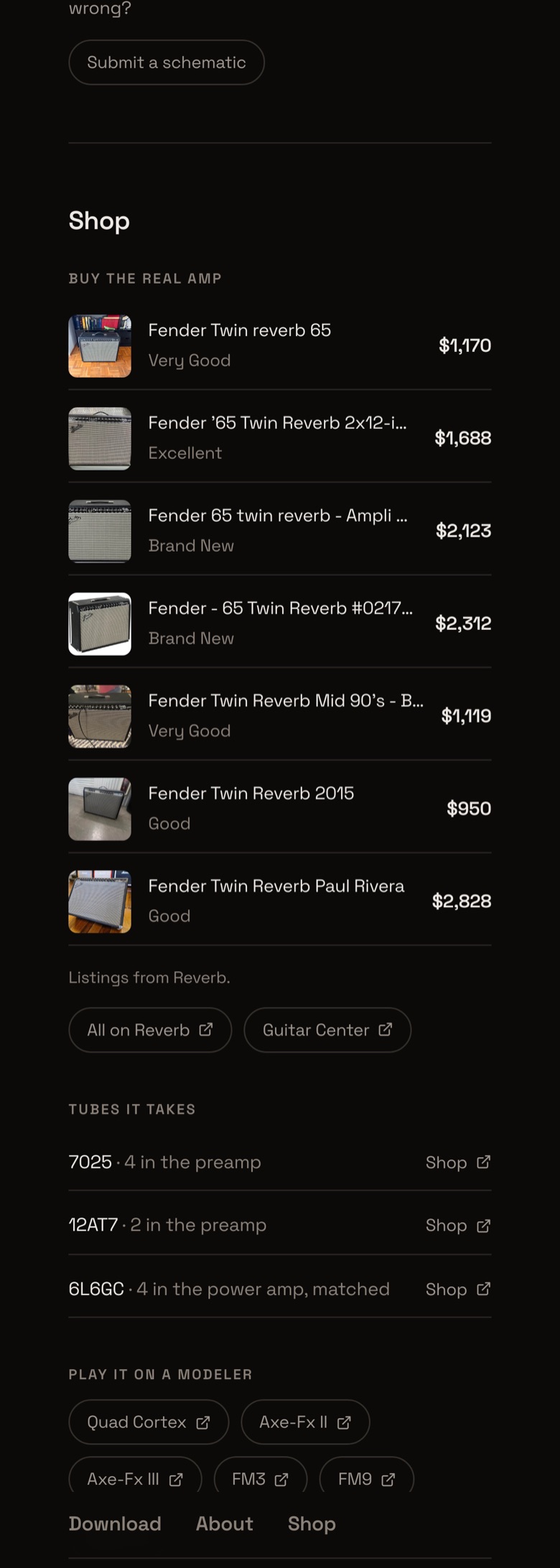
- Buy the real ampLive Reverb listings for the exact amp on every page, matched on model name, sibling models and production years, so a Mark IIC+ page never shows a Mark IIC. Cached, click-tracked and affiliate-linked.
- The rest of the rigThe tubes the amp takes and the modelers that play it, one tap from the same page.
- Checkout and licensingStripe with Link, Klarna, Cash App Pay and Amazon Pay alongside cards. Commercial use of the circuit data is licensed through the Data API.
An experiment in being the best answer.
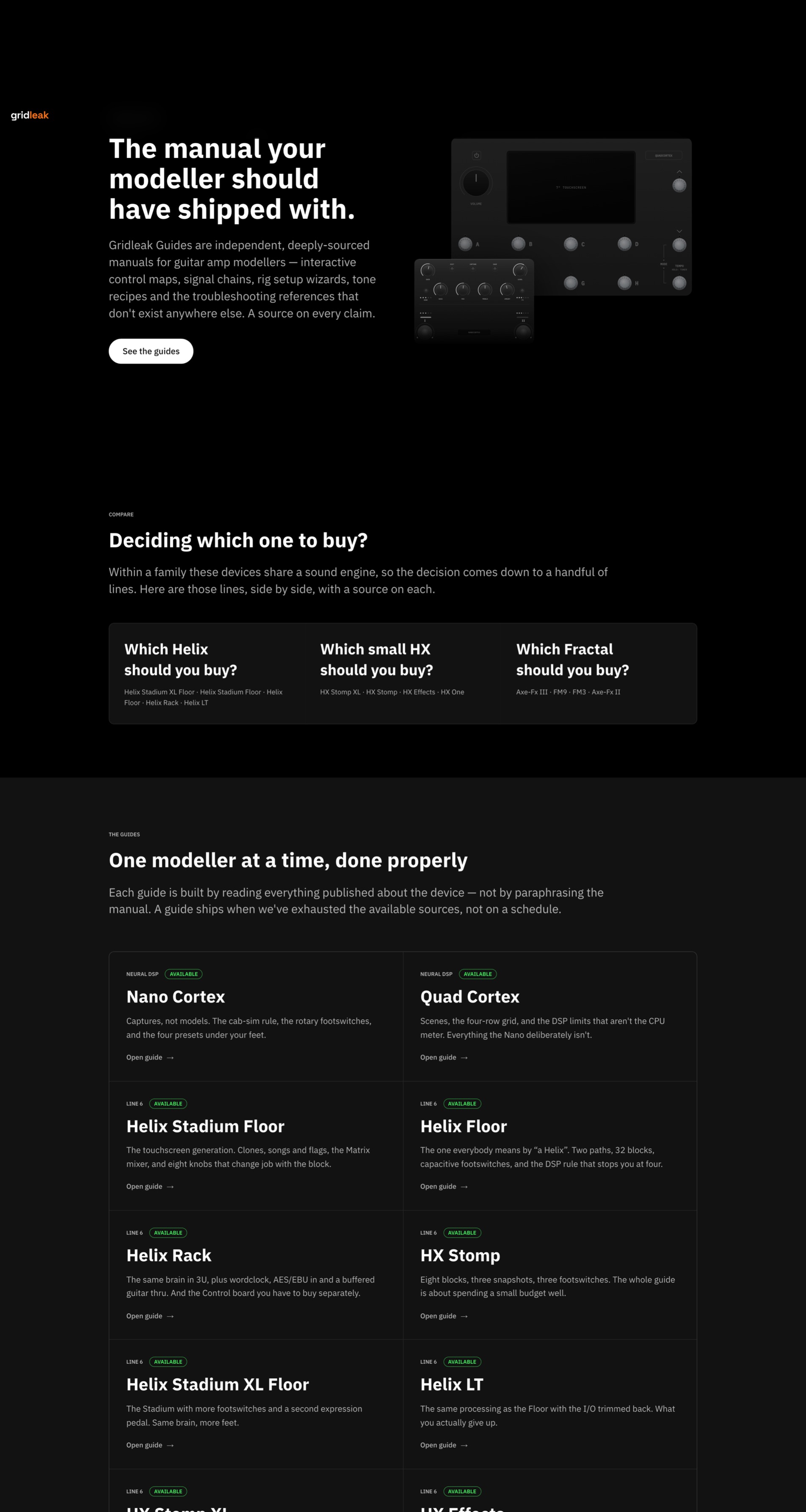
Players search for help with their modeler far more often than they search for presets. Gridleak Guides is an exploratory bet on that traffic: independent, deeply sourced manuals for the Quad Cortex, Nano Cortex, the Helix family and the Fractal range, with interactive control maps, signal chains, rig setup wizards, tone recipes and buyer's comparisons. Fifteen guides and 354 pages, each one sourced on every claim, all leading back to presets built for the same hardware.

FastAPI on Railway, Supabase for the preset database, Cloudflare R2 for the preset files, and Cloudflare Pages Functions at the edge for bot-facing server rendering and zero-cost A/B testing. A React frontend built for players who are usually engineers too, a Data API for circuit data, and an MCP server so AI assistants can look up amps, compare them and find the closest factory model on a player's own modeler.
Gridleak is live at gridleak.app.